
How to Decode a VIN Before You Buy a Used Car: A Complete Guide
Search Window Sticker
Table of Contents
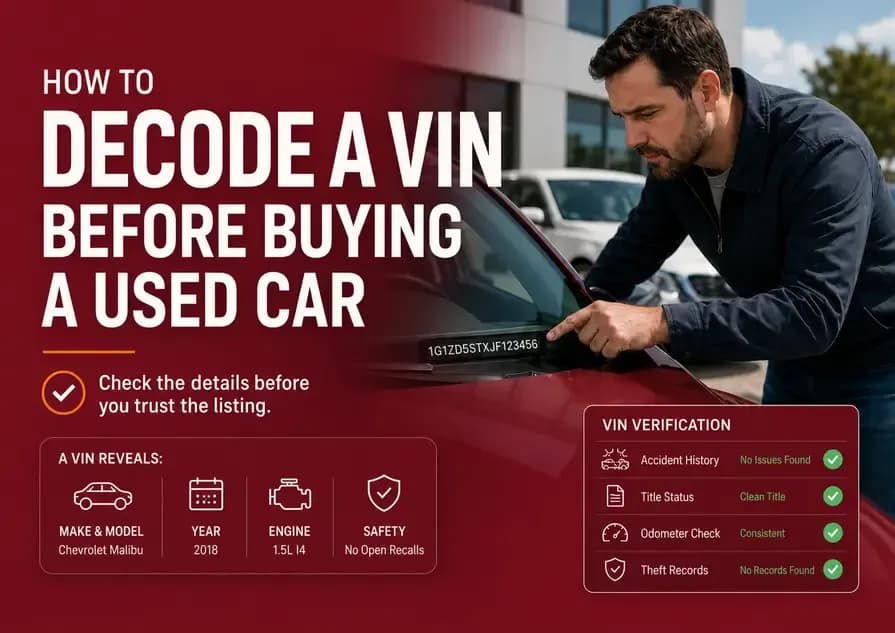
Buying a used car can feel exciting and a little tense. The photos look good, the price seems fair, and the seller says everything checks out. But before you plan the test drive, learn how to decode VIN before buying a used car so you can confirm the basics first. A VIN can help you check the vehicle’s identity, specs, year, engine, title clues, and whether the car deserves a deeper look.
Key takeaways:
 A VIN helps confirm the car’s identity before you trust the listing.
- VIN decoding is useful, but it does not replace a full vehicle history report.
- Always compare the VIN on the car with the VIN on the title, registration, and seller documents.
If you’re checking a GM vehicle, you can start with this free GM VIN decoder to confirm basic details before moving deeper into the buying process.
First, What Does a VIN Actually Mean?
A VIN, or Vehicle Identification Number, is a unique code assigned to a vehicle. Think of it as the car’s ID badge. Not glamorous, maybe, but very useful.
The VIN number meaning is tied to how the vehicle was built and identified. A modern VIN usually has 17 characters. Those letters and numbers can point to the manufacturer, vehicle type, engine, model year, assembly plant, and production sequence.
Here’s the thing: the VIN will not tell you every secret by itself. It will not whisper, “This car had a rough winter in Ohio,” or “The previous owner skipped oil changes.” But it can help you catch mismatches before you spend time, money, and energy on the wrong car.
That’s why understanding the car VIN number's meaning matters. It turns a random-looking code into a quick reality check.
Why Decode the VIN Before You Buy?
A shiny listing can hide messy details. Not always. Some sellers are honest and organized. But used cars pass through owners, dealers, auctions, repairs, and sometimes long periods of neglect. A VIN gives you a starting point that does not rely only on someone’s description.
Confirm the Car Is What the Seller Says
The listing might say “loaded trim,” but the VIN may show a different series, engine, or configuration. That difference can affect value.
Catch Basic Listing Mistakes Early
Sometimes sellers copy old details from another ad. Sometimes they guess. VIN data helps you separate a simple mistake from a bigger concern.
Compare Similar Cars More Fairly
Two used SUVs can look almost identical online. Their engines, drivetrains, original MSRP, and features may be very different.
Check If the VIN Matches the Documents
The VIN on the dashboard should match the title, registration, insurance records, and seller paperwork. If it doesn’t, slow down.
Decide If a History Report Is Worth It
A free decode can confirm basic identity. A paid report may be worth getting if the car still looks promising.
Avoid Wasting a Test Drive
You know that feeling when a car looks perfect online, then feels wrong in person? VIN checking can save you that trip.
Where Is the VIN Number Located on a Used Car?
Before you decode anything, you need the correct VIN. Sounds obvious, but typos happen all the time. A wrong “5” instead of an “S” can send you chasing the wrong vehicle.
So, where is the VIN number located on a used car?
Driver-Side Dashboard
Stand outside the vehicle and look through the lower corner of the windshield on the driver’s side. This is the most common VIN spot.
Driver-Side Door Jamb
Open the driver’s door and check the certification label near the latch area. You may see the VIN with tire and weight information.
Vehicle Title
The title should show the legal VIN. Compare it carefully with the VIN on the car.
Registration Documents
Registration records should also match the vehicle. Any mismatch needs a clear explanation.
Insurance Documents
Insurance paperwork often lists the VIN. This can help confirm the number if the seller provides records.
Service Records
Repair invoices, maintenance records, and inspection sheets may list the VIN. These are helpful when checking the car’s paper trail.
Quick tip: take a photo of the VIN instead of typing it by hand. Less drama. Fewer mistakes.
VIN Decoding Guide Step by Step
Now let’s make the code less mysterious. This VIN decoding guide step by step keeps it simple without turning the article into a factory manual.
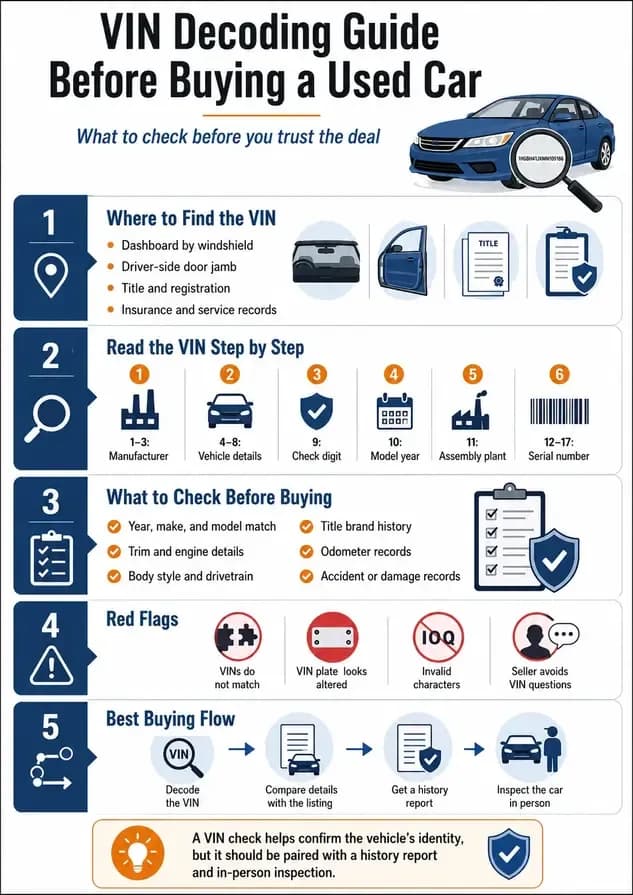
- 1
Check the VIN Length
Most vehicles built for the modern U.S. market use a 17-character VIN. If it is shorter, the car may be older, imported, or using a different identification format. - 2
Read the First Three Characters
The first three characters are the World Manufacturer Identifier. They can point to the country, manufacturer, and vehicle make. - 3
Review Characters Four Through Eight
This section often describes the vehicle line, body style, engine, restraint system, or related specs. The exact meaning can vary by brand and year. - 4
Look at the Ninth Character
The ninth character is the check digit. It helps validate whether the VIN follows the correct format. It is not a trim or engine code. - 5
Find the Tenth Character
The tenth charater usually shows the model year. Be careful, though. Model-year codes repeat over time, so context matters. - 6
Check the Eleventh Character
The eleventh character usually points to the assembly plant. This can help confirm where the vehicle was built. - 7
Review the Last Six Characters
The final characters usually form the production sequence. This separates one vehicle from another. - 8
Compare the Decode With the Car
This is the part people skip. Don’t. If the decode says one body style and the vehicle is another, ask questions.
What to Look for in a VIN Check Before Buying a Used Car?
A VIN check should not be treated like a magic stamp of approval. It is more like opening the hood before the mechanic arrives. You are not done, but you are smarter than you were five minutes ago.
Here is what to look for in a VIN check before buying a used car.
Year, Make, and Model Match
Start with the basics. If the VIN says one model year and the listing says another, ask why.
Trim and Engine Details
Trim and engine differences can change price, fuel use, towing ability, and resale value.
Body Style and Drivetrain
Check whether the car is FWD, RWD, AWD, coupe, sedan, truck, SUV, or van as described.
Title Brand History
A history report may show salvage, rebuilt, flood, fire, junk, or other title brands when available,
Odometer Records
Mileage should move in a logical direction over time. Strange mileage gaps deserve attention.
Accident or Damage Records
A report may show accident, damage, structural, or insurance-related records when those records are available.
Auction or Sales History
Auction records can reveal prior condition notes, photos, or sale activity. Car flippers pay close attention here.
Recall and Safety Information
Check for open recalls through trusted sources. A recall does not always mean “don’t buy,” but it should be handled.
How to Check VIN Number Without Getting Lost?
If you’re wondering how to check VIN number details without turning your evening into detective work, use a simple order.
Start with a free VIN decoder. Confirm year, make, model, trim, engine, drivetrain, and basic specs. Then compare those details with the listing, title, photos, and seller answers.
Next, get a vehicle history report if the car is still on your shortlist. This step matters more if the price is high, the seller is private, the car has moved between states, or the listing feels a little too polished. Honestly, a clean-looking car can still have a complicated past.
After that, inspect the vehicle in person. Look for paint mismatch, uneven panel gaps, warning lights, worn pedals, damp carpets, strange smells, and tires that do not match. The VIN tells one part of the story. The car tells the rest.
If you are unsure which one you need, this guide on VIN decoder vs vehicle history report explains the difference clearly.
How to Tell If a VIN Number Is Fake
A fake VIN is not common in normal shopping, but VIN problems do happen. Sometimes it is fraud. Sometimes it is a typo. Either way, treat it seriously.
The VIN Has the Wrong Length
Most modern VINs have 17 characters. A modern car with a shorter VIN needs more checking.
The VIN Uses Invalid Characters
Modern VINs do not use the letters I, O, or Q because they can be confused with numbers.
The VIN Plate Looks Altered
Scratched rivets, odd fonts, crooked plates, or fresh marks around the VIN area can be warning signs.
The VINs Do Not Match
Dashboard, door jamb, title, registration, and service records should agree. If they don’t, pause.
The Decode Does Not Match the Car
If the VIN decodes as a sedan and you are looking at a truck, something is wrong.
The Seller Avoids VIN Questions
A serious seller should not be nervous about sharing the VIN. If they dodge simple questions, that says something.
If the VIN will not decode at all, do not assume the worst right away. There may be a simple input issue, an older VIN format, or a data gap. This guide on why a VIN may not be found can help you check the common causes before moving on.
A VIN Decoder for Used Cars Is a Starting Point, Not the Finish Line
A VIN decoder for used cars helps you check facts before emotion takes over. And emotion does take over. We’ve all seen a car that looks just right: the stance, the wheels, the color, the whole thing. Suddenly, small doubts get quiet.
That’s exactly when the VIN helps.
A decoder can confirm basic identity. A history report can add past records. A mechanic can inspect the physical condition. A test drive can tell you how the car feels. Each step catches a different kind of problem.
For buyers, that means fewer surprises. For enthusiasts, it means knowing what you’re really looking at. For car flippers, it means cleaner numbers and fewer painful mistakes.
Before You Say Yes to the Deal
Used-car buying is part research, part instinct, and part patience. The VIN will not make the decision for you, but it can keep you from making the wrong decision too quickly.
Before you buy, decode the VIN, compare the details, read the history, and inspect the car like the money matters — because it does.
If the vehicle is a GM model, you can check the VIN with the GM VIN decoder to confirm basic specs first, then decide whether a full vehicle history report makes sense.